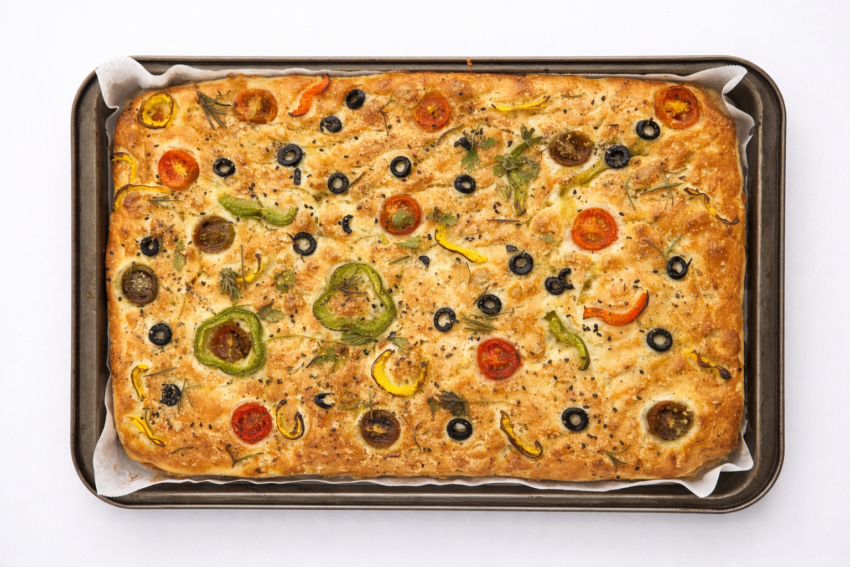
To kick off the new year, I spent an afternoon at Huom Culinary Canvas, Dubai, learning how to make traditional focaccia. What surprised me most was how much chemistry was happening right in front of me, especially during proofing. My favourite moment was punching the dough after it had risen and watching the trapped carbon dioxide escape, causing the dough to instantly shrink to about half its size.
Baking bread used to feel intimidating (and I definitely failed at it more than once), but learning from Chef Perly and the Huom team made everything click.
Here’s how to make traditional focaccia, right down to the molecular level.
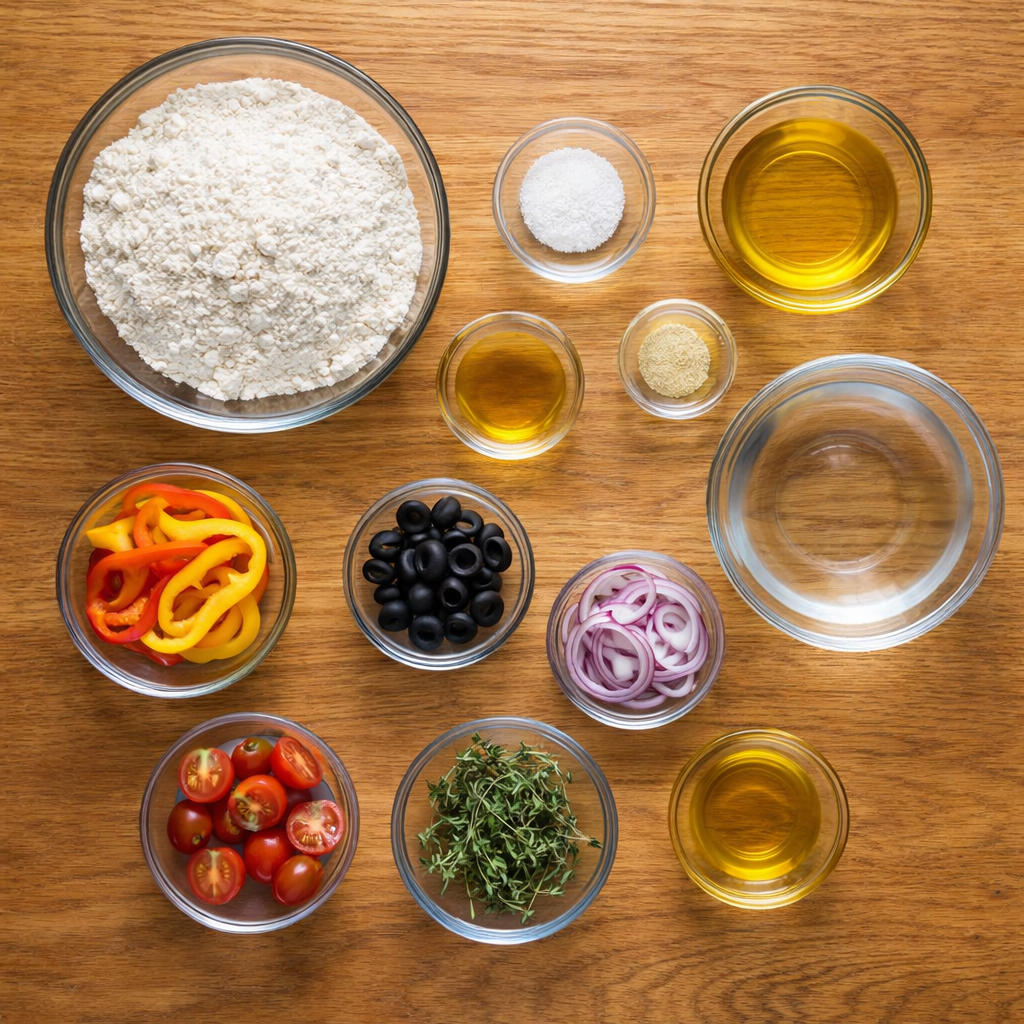
Ingredients (makes 2 focaccias)
For the dough:
- All purpose flour (650g)
- Salt (10g)
- Honey (10ml)
- Olive oil (25ml)
- Yeast (7g)
- Warm water (600ml)
For the toppings (all are optional, except olive oil):
- Sliced bell peppers
- Black olives
- Slices onions
- Cherry tomatoes
- Thyme and oregano sprigs
- Olive oil (30ml)
In a large mixing bowl, combine the warm water, honey, and yeast.
Biologically, yeast is a single-celled microorganism from the fungus kingdom, but in bread-making it acts as a biocatalyst. It speeds up the chemical reactions that make dough rise without being used up itself. When mixed with warm water, the yeast is “activated,” meaning it wakes up from its dormant state and begins fermenting sugars (more on that later).
In a separate bowl, mix together all the dry ingredients. Add the wet ingredients to the dry and mix thoroughly, either by hand or with a stand mixer. If mixing by hand, fold the dough by scooping it from the bottom and folding it over itself until no dry flour remains.
Turn the dough out onto a surface and begin kneading. Use the base of your palms to flatten the dough, fold it back onto itself, rotate it 90 degrees and repeat. Continue until the dough is smooth and all ingredients are fully incorporated.
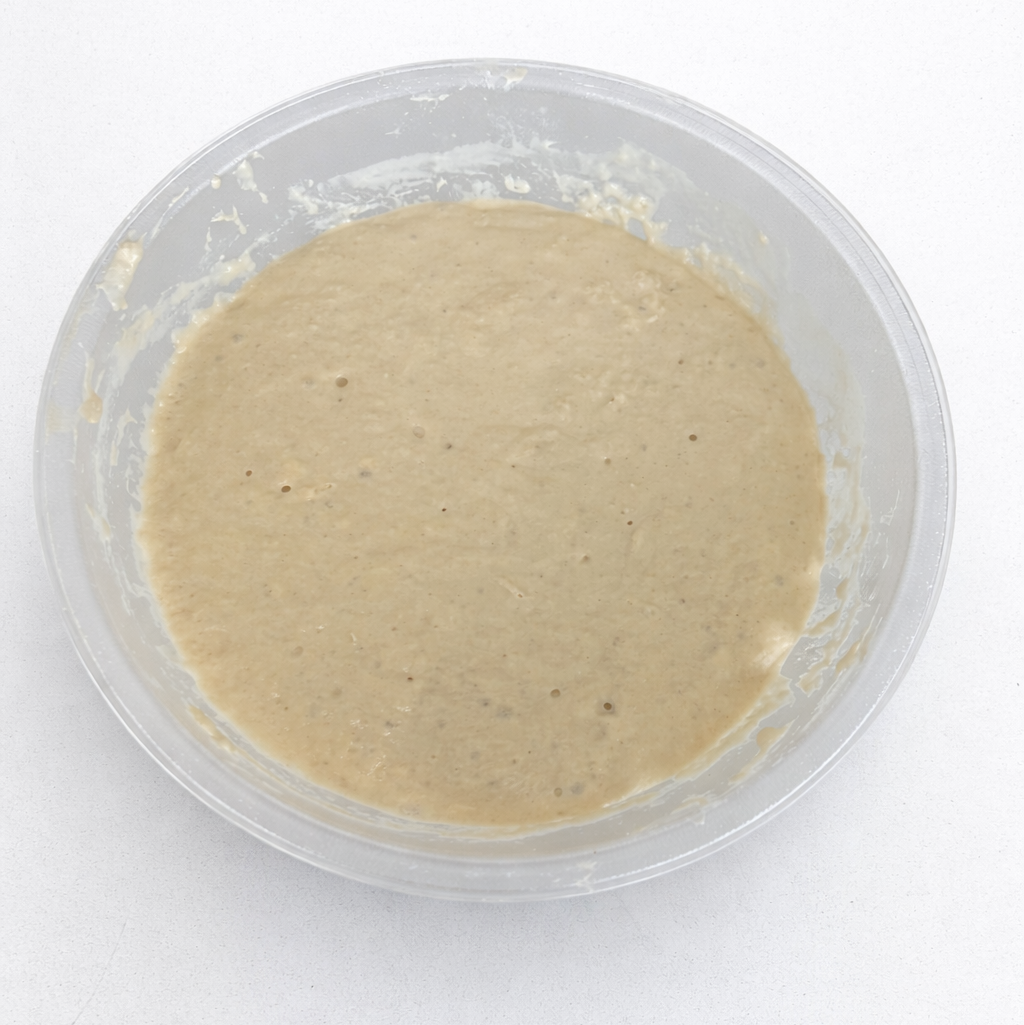
Place the dough back into the bowl, seal it tightly with plastic wrap and let it rest in a warm, slightly humid environment. These conditions keep the yeast active and prevent the dough from drying out. If the air is too dry, a hard skin can form on the surface which would limit how much the dough can expand. Covering the bowl with plastic wrap or a damp towel helps trap moisture.
During this resting period, the yeast drives a process called anaerobic fermentation. In the absence of oxygen, yeast breaks down glucose (supplied by the honey) to release energy. The main reaction is:
C₆H₁₂O₆ (glucose) → C₂H₅OH (ethanol) + CO₂ (carbon dioxide) + energy (ATP)
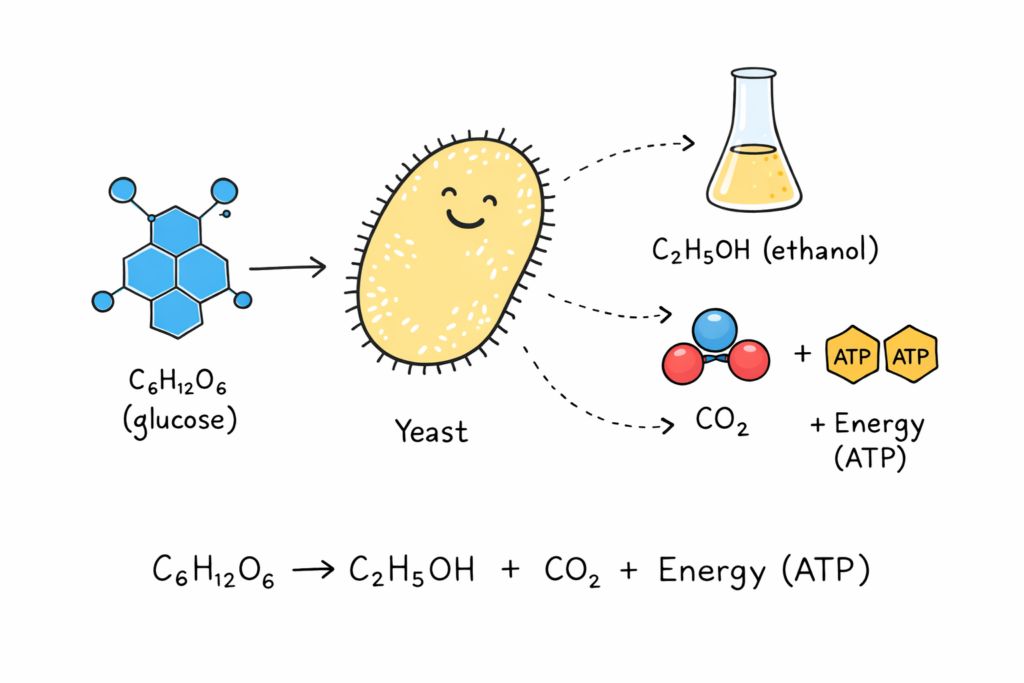
The carbon dioxide acts as a leavening agent. It becomes trapped in the stretchy gluten network of the dough. These trapped gas bubbles cause the dough to rise and give focaccia its light, airy structure. The ethanol produced mostly evaporates during baking but it contributes to that recognisable yeasty aroma of bread.
After the dough has rested (ideally overnight, or at least 2 hours) grease a thin rectangular baking tray lined with parchment paper with olive oil. Pour in the dough and drizzle more olive oil over the top. Gently press your fingers into the surface to create the staple focaccia dimples, then add any toppings you like.
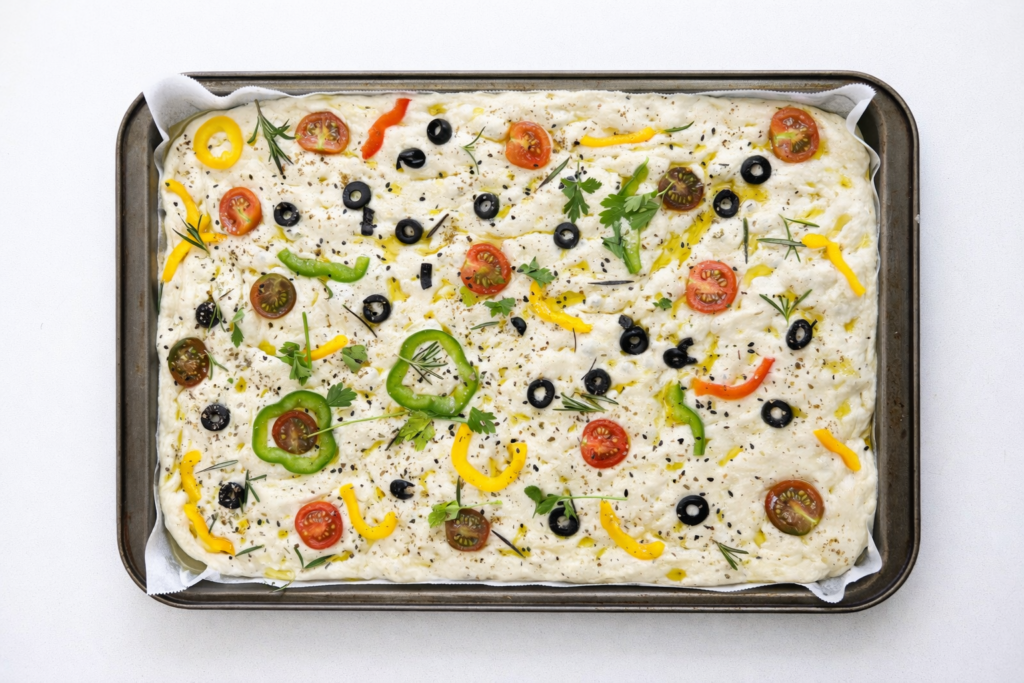
Bake at 400°F (200°C) for 20-30 minutes, depending on the thickness of the dough. Thinner loaves will bake faster. A good rule of thumb is to remove it from the oven when the surface is nice and golden brown.
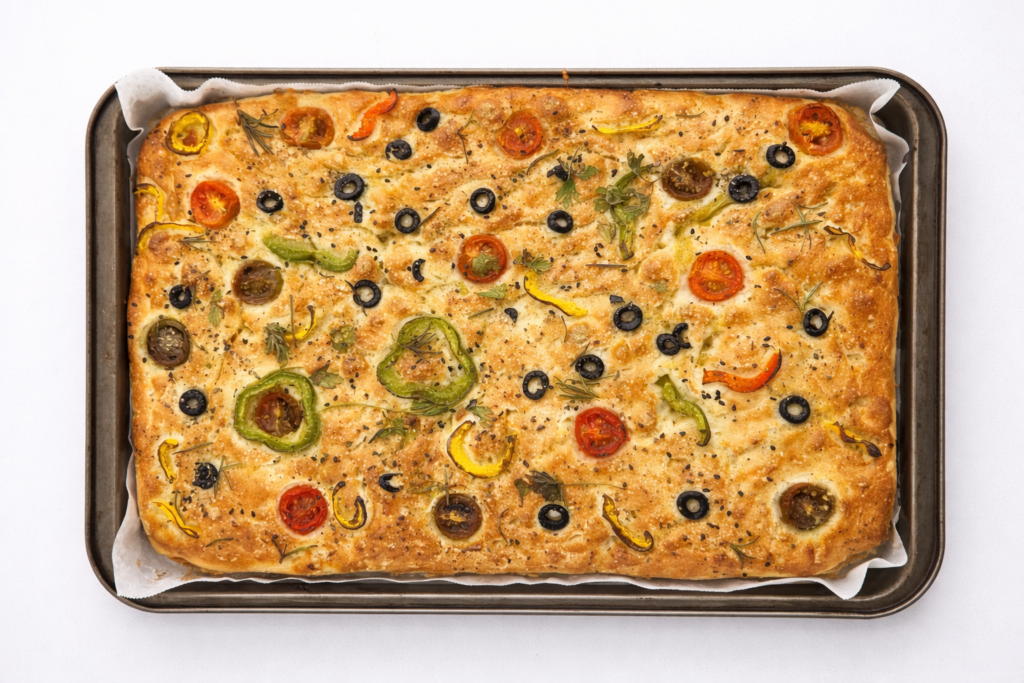
Your focaccia is now ready to serve, freshly out the oven. I would recommend making some sort of pesto, burrata sandwich, or just have it with some good quality olive oil.
If you’re one of those people who has always feared making bread because it’s too difficult, or requires too much special equipment, I hope this guide has helped you see otherwise.
If you’re in Dubai, don’t forget to visit Huom Culinary Canvas and take part in one of their fantastic cooking classes.
The end product was amazing. Paired it with olive oil and chilli oil and made an evening out of it.
Well done .
This is so good! Well Done!